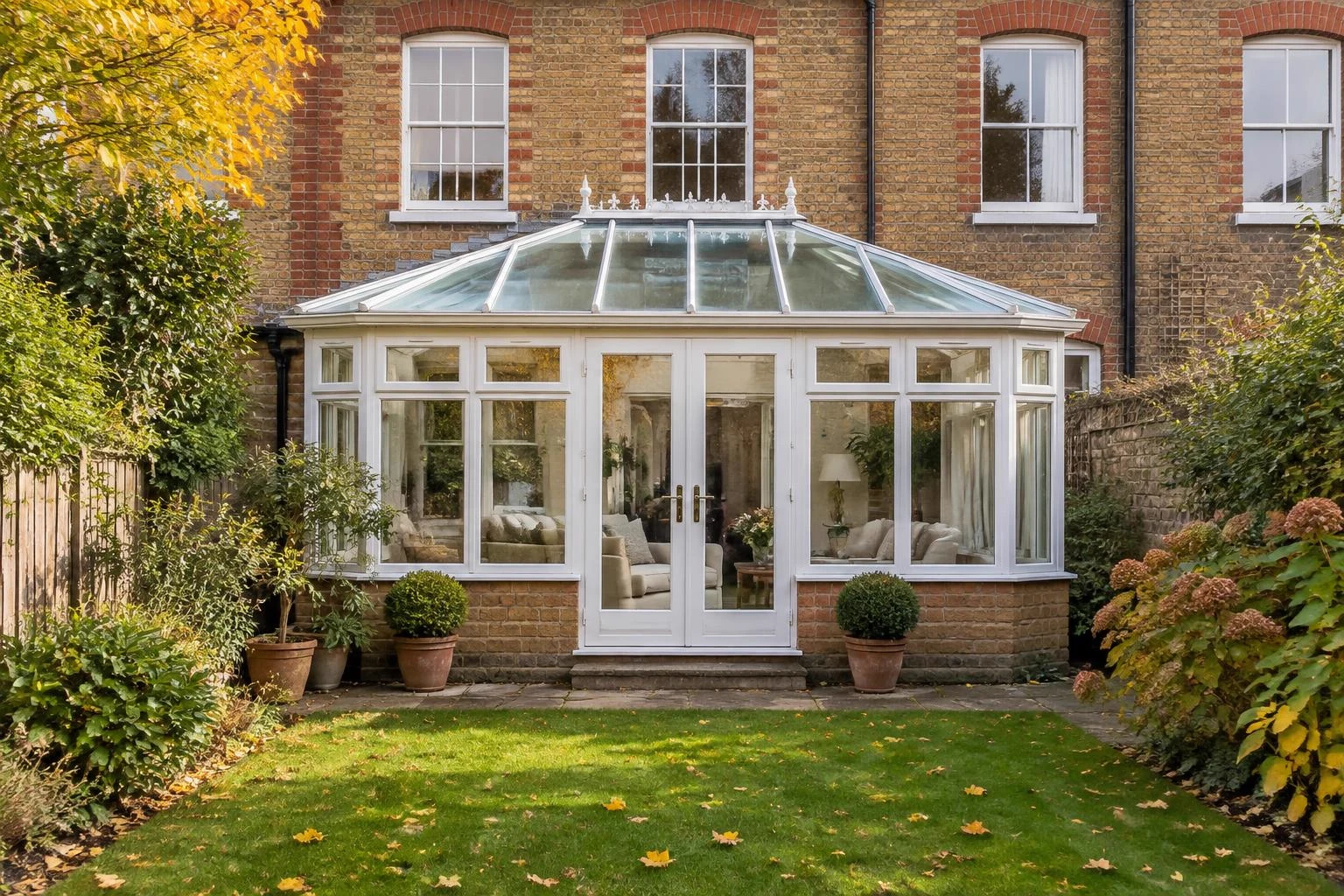
Why algae keeps coming back on conservatory roofs, what actually slows it down, and what to do in the weeks before winter.
Most conservatory roofs look fine in October and green by March.
Nothing dramatic happens in between. Winter is damp, the light is low, the roof barely dries, and algae gets exactly the conditions it needs. By the time spring arrives, a roof that looked acceptable going in is streaked and cloudy.
That's why the weeks before winter matter more than the weeks after it.
Why does algae keep coming back on a conservatory roof?
Because a conservatory roof is close to the perfect place for it to grow. Algae needs moisture, a little shelter and something to feed on, and a roof provides all three.
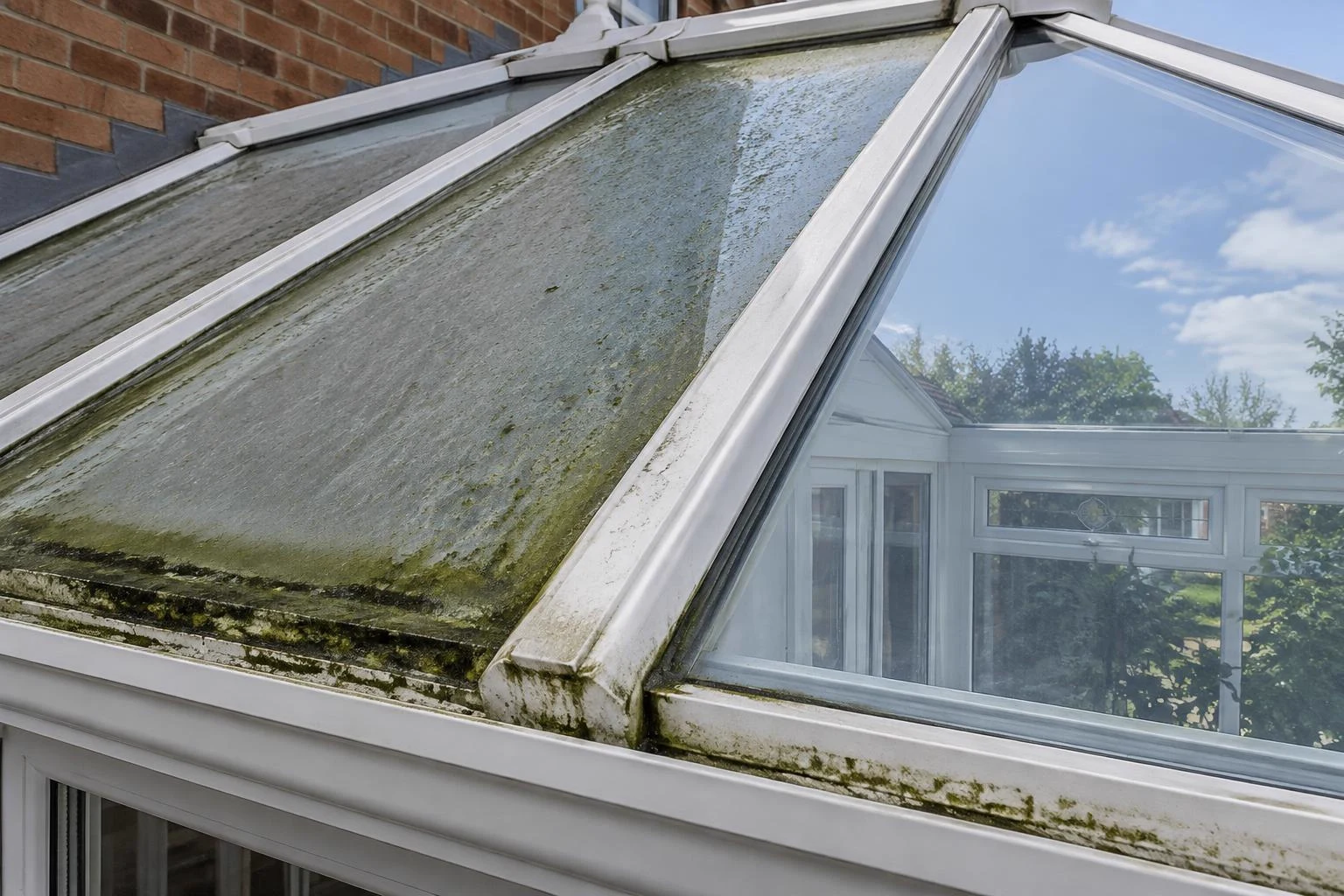
Glazing has very little slope compared with a house roof, so water sits on it instead of running straight off. The lower edges, the glazing bars and the channels collect moisture and stay damp long after the rest of the roof has dried. Dust, pollen and the film of dirt that settles on any surface give the algae something to feed on, and north-facing or tree-shaded roofs stay damp for longer.
In north London the trees make this considerably worse. Plane, sycamore and lime drop sap, honeydew and fine debris onto roofs below them, and that residue feeds growth. A conservatory that sits under a mature tree is fighting a losing battle without regular attention.
This is also why cleaning it once doesn't fix it. If you remove the growth but leave the conditions that produced it, the algae returns. The aim is to make it harder for it to take hold again.
What actually slows it down
Four things make a real difference, and none of them involves a special product.
Keep the roof cleaned on a regular schedule. Algae spreads from a thin film into established growth over time. A roof cleaned twice a year, spring and early autumn, never gets to the stage where it is hard to shift. Our guide on how to clean a conservatory roof explains how the cleaning itself should be done and when to call a professional.
Cut back what's overhanging. Branches above the roof drop debris, hold moisture against the glass and shade the surface, and all three help algae. If you can reduce overhang safely, or ask whoever looks after the tree to do it, the roof stays cleaner for longer.
Keep the drainage clear. Blocked gutters and clogged channels leave water sitting at the lower edge of the glazing, which is exactly where algae starts first. Clearing the gutter cleaning on the conservatory and the main house in the same visit removes a common source of the problem. Our why autumn is the critical window covers the timing.
Treat established growth properly. A surface wash removes what you can see, but established algae leaves roots behind in the pores of the surface and in the frame channels, and it returns within weeks unless it is treated. Professional treatments exist for this and work more slowly than a wash, killing the growth rather than just wiping it away. Whether a treatment suits your roof depends on the glazing type, so it is worth asking before anything is applied.
What to avoid
This is where most of the damage is done, and it's usually done with good intentions.
Pressure washers. High pressure forces water past the seals and into the frame, and it can damage gaskets and the surface of the glazing. It also works the algae into the joints rather than removing it. It looks fast, and it is the quickest way to cause a leak.
Bleach and strong household chemicals. Bleach attacks rubber seals and gaskets, and the run-off harms the plants in the beds below. It also doesn't solve the underlying problem, because the surface is left just as damp and shaded as before.
Abrasive pads and stiff brushes. Scratches on glass and polycarbonate hold dirt and moisture, so the roof gets dirty faster afterwards.
Climbing onto the roof. Conservatory glazing is not designed to take a person's weight, and it is how people go through roofs. If you cannot reach it safely from the ground or from inside, leave it to someone with the right equipment.
If your roof has self-cleaning or coated glass, check the manufacturer's guidance before using any treatment or cleaner. Some products can affect the coating.
Why the weeks before winter matter most
Between November and March the roof rarely gets the long, dry, sunny spells that stop algae establishing. Damp settles in and stays.
A roof that goes into that period already carrying growth, and with blocked channels at the edges, has four or five months of ideal conditions ahead of it. A roof that is clean and draining properly goes in with a head start, and it looks noticeably better in spring.
If you do only one clean a year, make it autumn. We'd always rather deal with it before the wet weather than after.
Is green growth just cosmetic?
Mostly, at first. A thin film of algae is a visual problem: the roof looks dull, light levels fall and the room gets darker and warmer in summer.
It becomes more than cosmetic when it is left. Growth builds in the channels and around the seals, holds moisture against them for months and makes the roof harder and more expensive to put right. Blocked drainage channels also lead to overflow at the edges, which is how damp gets into frames and walls.
That's the reason to deal with it early. The job is much smaller at the start than it is after three winters.
Frequently asked questions
Why does my conservatory roof go green so quickly?
Glazing has little slope, so water sits on it, and the lower edges and glazing bars stay damp long after the rest of the roof dries. Add dust and tree debris as a food source, particularly on a north-facing or shaded roof, and algae establishes quickly.
How do I stop algae growing on my conservatory roof?
Clean it on a regular schedule, reduce overhanging branches, keep the gutters and drainage channels clear, and treat any established growth rather than just washing it off. No single step stops it completely, but together they slow regrowth considerably.
When is the best time to clean a conservatory roof?
Early autumn is the most useful time, before the wet winter months, with a second clean in spring. A roof that goes into winter already green stays damp and shaded for months.
Can I use a pressure washer on my conservatory roof?
It's not recommended. High pressure forces water past seals and into the frame, can damage gaskets and glazing surfaces, and pushes algae into the joints rather than removing it.
Is bleach safe on a conservatory roof?
Not as a regular approach. Bleach attacks rubber seals and gaskets, and the run-off can harm plants below. It also doesn't address the damp, shaded conditions that algae grows in.
Will algae damage my conservatory roof?
A thin film is mostly cosmetic. Left for several seasons, growth builds in the channels and around the seals, holds moisture against them and can lead to drainage problems and damp at the edges.
How much does conservatory roof cleaning cost?
It depends on the size and type of the conservatory, the roof's condition and how long since it was last cleaned. We'll give you a free, no-obligation quote.
Conservatory roof cleaning across north London
We look after conservatories across north London, from the period homes around Hampstead to the extensions and orangeries of the surrounding suburbs. If green growth is already showing, the sooner it's dealt with, the easier it is.
Tell us about the roof and we'll give you a price and tell you honestly what it needs. Our conservatory cleaning service covers the glazing and frames.