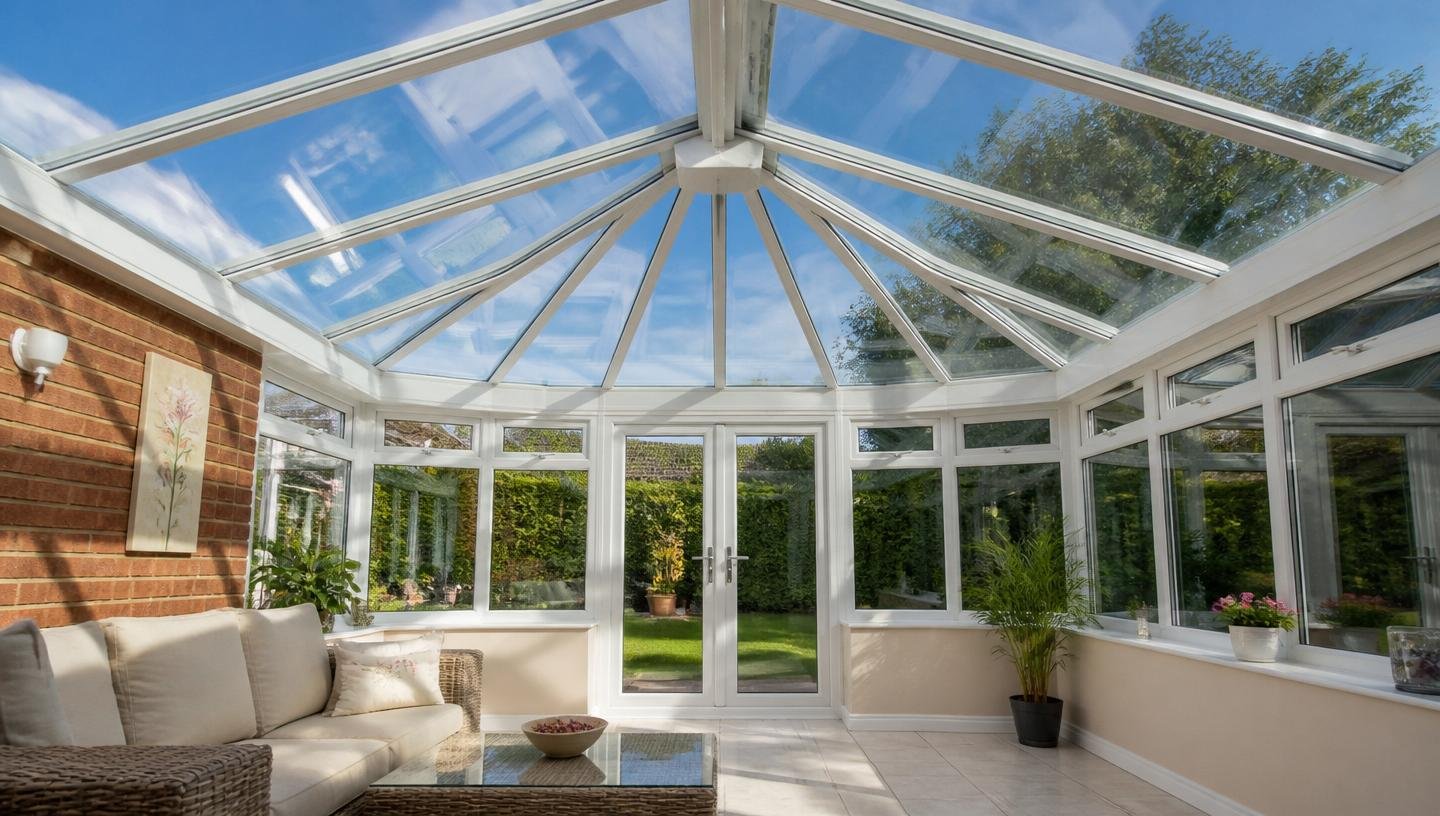
A practical guide to cleaning a conservatory roof safely — what works, what damages the glazing, and when the job is better left to a professional.
A conservatory roof should be cleaned twice a year: once in spring and once in early autumn. Left longer than that, algae, moss and general grime build up on the glazing and in the frame channels, and what starts as a cosmetic problem turns into a drainage and maintenance one.
Most people notice the issue in the same way. The room stops feeling bright. The glass looks green rather than clear when you stand underneath it. And on a sunny day the light coming through has a dull, filtered quality that no amount of cleaning from the inside seems to fix.
This guide covers what actually works, what quietly damages your roof, and where the line sits between a job you can do yourself and one worth handing over.
Why conservatory roofs get dirty faster than the rest of the house
A conservatory roof collects dirt faster than any other glazed surface on a property because it sits at a shallow angle and never gets the full scouring effect of heavy rain running down a vertical pane.
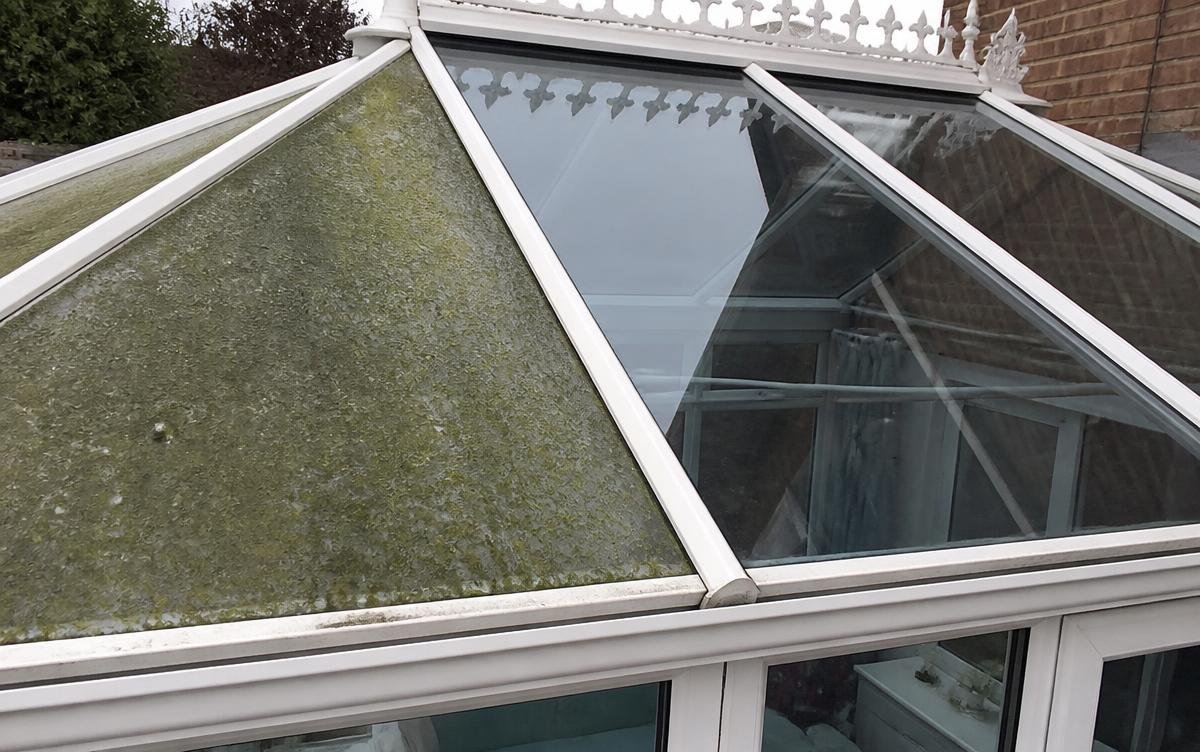
Three things build up:
Algae and green growth. North-facing roofs and those shaded by trees hold moisture for longer, and that is all algae needs. In north London, mature street trees make this considerably worse — plane, sycamore and lime all shed sap and debris that feed growth on the glazing.
Organic debris. Leaves, blossom, seed pods and moss fragments wash down from surrounding roofs and trees and lodge in the roof's channels and gutters.
Traffic film. London air deposits a fine layer of particulates that bonds to glass and polycarbonate over time. It is not visible day to day, but compare a cleaned panel against an uncleaned one and the difference is obvious.
The combination is why a conservatory can look tired after eighteen months even when the rest of the house looks fine.
Can you clean a conservatory roof yourself?
Yes — a conservatory roof can be cleaned from ground level using a telescopic brush with a soft head and a mild detergent solution. For a single-storey conservatory in reasonable condition with good access, this is often enough.
The method that works:
- Clear the debris first. Remove leaves and loose material from the roof channels and box gutter before introducing any water. Washing debris into a blocked channel makes the problem worse. If the box gutter itself is blocked, that is a gutter cleaning service job — the two are usually done together.
- Work from the top down. Start at the ridge and work towards the eaves so dirty water runs away from the cleaned area.
- Use a soft-bristled telescopic brush. Water-fed poles with soft heads are designed exactly for this.
- Rinse thoroughly. Detergent residue left on glazing dries into streaks and attracts fresh dirt faster than the original grime did.
- Finish with the frames and channels. The glazing gets the attention, but the frames are where problems start.
One thing worth knowing: if the roof is rinsed with ordinary tap water, it will dry with mineral spotting. London's water is hard, and on a large glazed surface that spotting is very visible. Professional pure water systems exist precisely to solve this.
Never walk on a conservatory roof. The panels are not load-bearing and will not support a person.
What damages a conservatory roof
Three common approaches cause real damage, and all three are widely recommended online.
Pressure washing. This is the most frequent and most expensive mistake. A pressure washer will force water past the glazing seals and into the frame structure, causing internal leaks that may not show for weeks. On polycarbonate it can also strip the UV-protective coating on the outer surface, after which the panels yellow and go brittle. Polycarbonate roofs should never be pressure washed.
Abrasive pads and scourers. Anything abrasive leaves fine scratches. On glass this dulls the surface permanently. On polycarbonate the damage is immediate and irreversible.
Bleach and harsh chemicals. Bleach solutions attack rubber seals and gaskets, and run-off kills plants in the beds below. They also do not solve the underlying problem — algae returns quickly once the surface is left damp and shaded.
If a quote you have received mentions jet washing a conservatory roof, that is a reason to ask more questions.
When should you call a professional?
The job stops being a DIY task at the point where reach, roof type or access becomes a factor.
Worth handing over when:
- The conservatory is on a first-floor extension or has restricted access. Working at height on or near a glazed roof is genuinely dangerous.
- The roof is polycarbonate and showing discolouration. Polycarbonate needs specific handling, and the difference between cleaning it and damaging it is not obvious.
- The green growth has been there more than a season. Established algae needs proper treatment, not just washing.
- The frame channels or box gutter are blocked. This is a drainage problem, and clearing it properly usually means accessing parts of the structure not reachable from a ladder.
- You want it done without water spotting. Pure water systems produce a finish that tap water cannot match on a surface this large.
What professional conservatory roof cleaning costs
| Conservatory type | Typical cost |
|---|---|
| Small lean-to (2–3 panels) | £60 – £90 |
| Standard Victorian or Edwardian | £90 – £140 |
| Large P-shaped or T-shaped | £140 – £220 |
| Roof clean + gutter and channel clear | Add £40 – £70 |
| Established algae treatment | Add £30 – £60 |
Costs vary with access, roof condition and how long it has been since the last clean. A conservatory neglected for several years takes considerably longer than one on a regular schedule — which is the practical argument for twice-yearly cleaning rather than waiting until the problem is visible.
Most north London conservatories fall in the £90–£140 range for a standard clean.
How often should a conservatory roof be cleaned?
Twice a year is the standard recommendation: once in spring, once in early autumn.
The autumn clean matters more than most people realise. Going into winter with a roof that already has algae growth and blocked channels means months of damp, shaded conditions with no drying weather — exactly what the growth needs. A conservatory cleaned in September looks materially better the following March than one cleaned in June.
If your conservatory sits under trees or faces north, three times a year is more realistic.
A note on older and period properties
Conservatories and garden rooms attached to Victorian and Edwardian houses often have details that need care: original or early glass in adjoining doors, cast-iron rainwater goods feeding into the conservatory guttering, and lead flashing where the roof meets the main house wall.
None of these respond well to aggressive cleaning. Lead flashing in particular can be dislodged by pressure washing, and the resulting leak appears inside the main house rather than the conservatory — which makes it both harder to diagnose and more expensive to fix.
If your property is in a conservation area, it is also worth checking before any work that involves altering or replacing roof components rather than simply cleaning them.
Frequently asked questions
How much does it cost to clean a conservatory roof in London?
Between £60 and £220 depending on size and condition. A standard Victorian conservatory typically costs £90–£140 for a full roof clean. Adding a gutter and channel clear costs a further £40–£70.
Can you pressure wash a conservatory roof?
No. Pressure washing forces water past the glazing seals and can strip the protective coating from polycarbonate panels, causing them to yellow and become brittle. Conservatory roofs should be cleaned with soft brushes and low-pressure water only.
How do you remove green algae from a conservatory roof?
Light growth comes off with a soft telescopic brush and a mild detergent solution, rinsed thoroughly. Established growth present for more than a season usually needs a proper biocide treatment applied by a professional, otherwise it returns within weeks.
How often should a conservatory roof be cleaned?
Twice a year — spring and early autumn. Roofs that are north-facing or shaded by trees benefit from three cleans a year.
Can I clean a conservatory roof myself?
Yes, for a single-storey conservatory with good access, using a soft telescopic brush from ground level. Never walk on a conservatory roof; the panels are not load-bearing and will not support a person.
Why does my conservatory roof look streaky after cleaning?
Hard water. London mains water leaves mineral deposits as it dries, which show clearly on large glazed surfaces. Professional pure water systems remove these minerals before the water touches the glass, so it dries without spotting.
Conservatory roof cleaning across north London
DP Window & Gutter Cleaning has been cleaning conservatory roofs across north London for over ten years — Islington, Camden, Muswell Hill, Hampstead, Highgate and the surrounding areas. We use pure water systems and soft-brush methods on every conservatory, with no pressure washing and no harsh chemicals.
Book before the autumn leaf fall and your conservatory goes into winter clean.