Why fascias and soffits go green and streaky, what cleaning them safely involves, and why replacing UPVC is rarely necessary.
Most people never look up.
They clean the windows, they sweep the patio, they get the gutters cleared in autumn. The fascia boards, the soffits and the bargeboards sit above all of it, quietly going green, and nobody notices until the day they do — usually from across the road, or in a photograph, or when a neighbour has theirs done and suddenly the difference is obvious.
By then a lot of people assume the boards are finished and need replacing. Most of the time they don't. They need cleaning.
What are fascias and soffits?
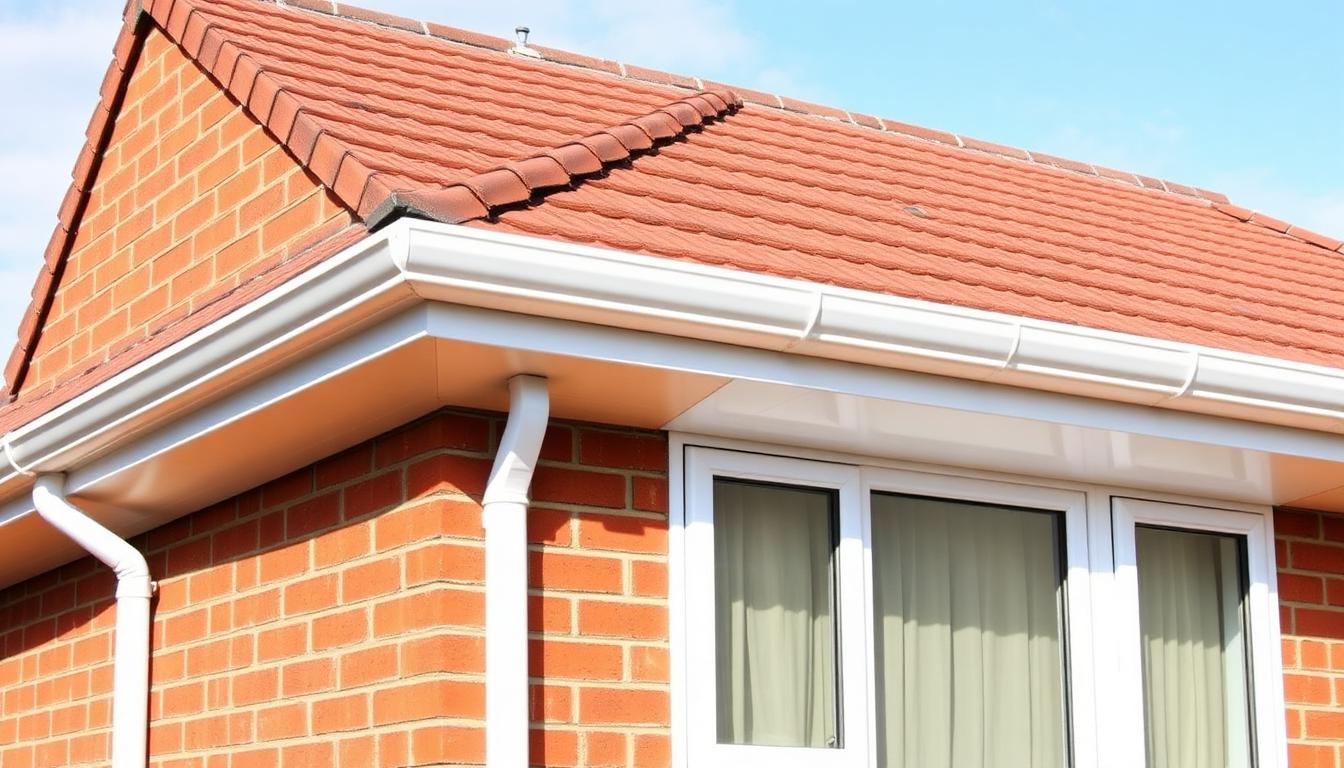
The fascia is the vertical board that runs along the edge of your roof, at the bottom of the tiles. It's the board your gutters are screwed into, so it carries their weight and takes all the water that runs off the roof.
The soffit is the horizontal board tucked underneath, spanning the gap between the fascia and the wall. It's the underside you see when you stand close to the house and look up. Soffits are usually vented, because the roof space behind them needs airflow to stay dry.
The bargeboards are the equivalent boards on a gable end, running up the slope of the roof.
Together they're often called the roofline. On most homes built or refurbished since the 1980s they're white UPVC. On older properties they may still be painted timber.
Why the roofline goes green and streaky
Two different things are happening, and they look different.
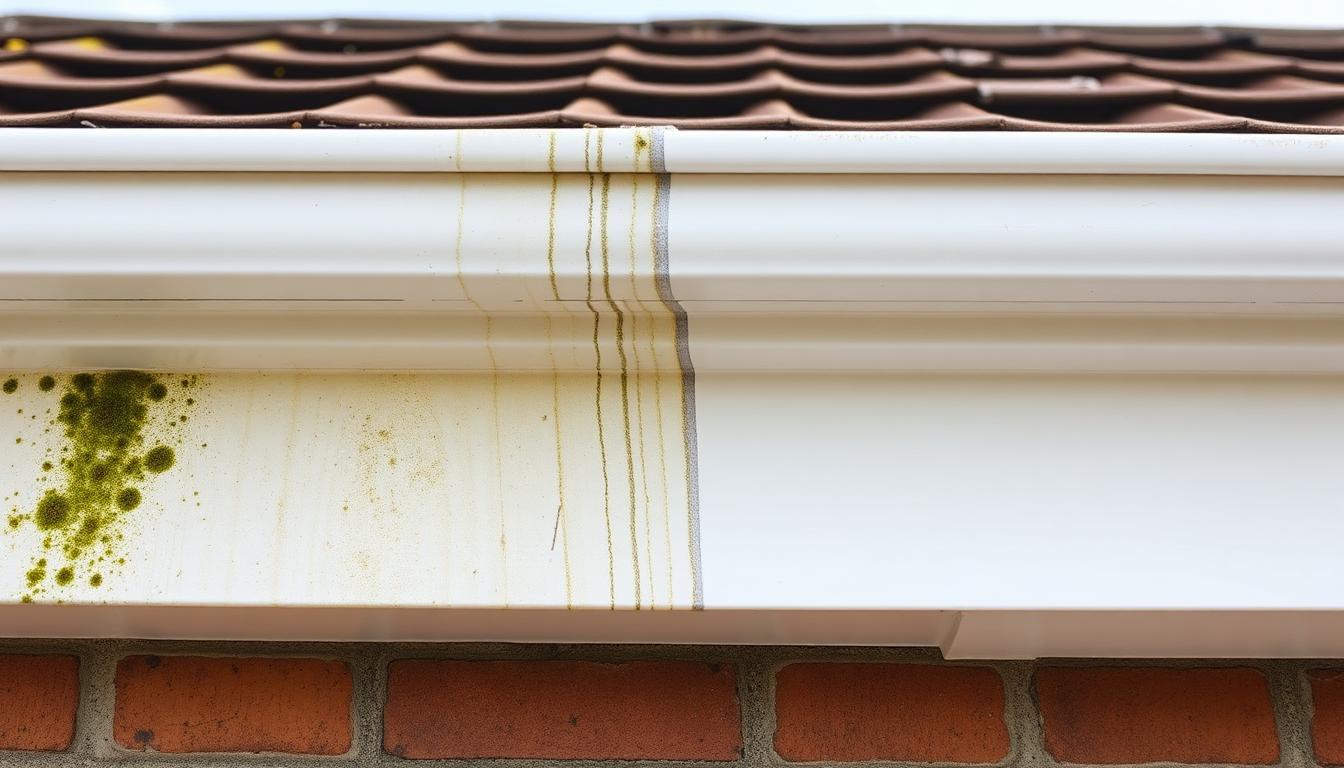
Green algae grows wherever a surface stays damp and shaded. The soffit is the worst affected because it faces downwards, dries slowly and gets very little direct sun. North-facing elevations go green first and worst. In a damp London autumn the whole roofline can turn from white to green in a matter of weeks.
Black vertical streaking on the fascia is something else. It's a mix of atmospheric dirt, roof runoff and traffic pollution, washed down the board by rain and left behind as the water evaporates. It always runs downwards in lines, and it's noticeably worse on properties near busy roads — which in north London is most of them.
There's usually a third thing on the outside face of the gutters themselves: a dark tide line of the same grime. That's why cleaning the roofline without cleaning the gutter exteriors leaves the job looking half-finished.
None of this is structural damage. It's surface soiling on a plastic board. It comes off.
Does dirty UPVC need replacing?
Almost never, and this is where a lot of money gets wasted.
Full roofline replacement on an average semi runs into four figures. It's genuinely necessary when timber boards have rotted, when UPVC has cracked or gone brittle, or when there's damage behind the boards. It is not necessary because the boards are green and streaky.
UPVC that has never been cleaned can look permanently stained, and homeowners reasonably conclude the discolouration has gone into the material. In the overwhelming majority of cases it hasn't — it's sitting on the surface, held there by years of accumulation. Cleaned properly with the right products, it comes back to white.
The honest exception is heavily oxidised UPVC. On boards that have had decades of UV exposure and no maintenance, the plastic surface itself can go chalky and slightly porous. Cleaning still improves those dramatically, but they won't come back to showroom white. We'll tell you which situation you're in before we start, not after.
How professional roofline cleaning is done
This is a job where method matters more than effort.
From the ground, using reach-and-wash poles. Extending poles fed with purified water let us reach the roofline of a two- or three-storey house from the driveway. No ladders resting against your fascia — which matters, because leaning a ladder on a UPVC fascia board is one of the more common ways they get cracked or bowed.
With UPVC-specific cleaners, not abrasives. The green algae and the black streaking respond to the right chemistry. They do not respond well to scouring, and abrasive pads leave micro-scratches in the plastic that hold dirt and make the next season's growth worse.
Not with a pressure washer. This is the important one. Blasting a roofline with high pressure will drive water up behind the fascia and through soffit vents into the roof space, and can lift boards off their fixings. It looks efficient and it causes problems you won't see until later.
Including the gutter exteriors. The outside face of the guttering gets cleaned as part of the same visit. It's the same tide line, in the same eyeline, and leaving it makes the rest look worse by contrast.
Why it pairs with gutter cleaning
If you're already having your gutters cleared, doing the roofline at the same time is the obvious move — and not just for convenience.
We're already at the roofline with the equipment set up. The gutters are being emptied on the inside, so cleaning the outside face finishes the job properly rather than leaving a clean gutter that still looks dirty. And with the gutter clear and the boards clean, anything genuinely wrong up there becomes visible: a sagging bracket, a leaking joint, rot in a timber fascia, a soffit vent that's blocked.
That last point is worth more than the cosmetics. A blocked or damaged roofline traps moisture against the roof timbers. Catching it while someone is already up there looking is a lot cheaper than finding it after a wet winter. If we spot something, we'll tell you — and gutter repairs can usually be sorted in the same visit.
How often should it be done?
Once a year is right for most north London homes, and autumn is the natural time — the same visit as your gutter cleaning, before the wet season sets in.
Some properties need it more often. Heavy tree cover, a north-facing elevation, a main road, or a low-lying damp plot will all bring the algae back faster. Others can stretch to eighteen months or two years. The pattern becomes obvious after the first clean: you'll know how quickly yours goes green.
The one thing that genuinely helps is not leaving it too long between cleans. A roofline cleaned annually takes an hour and comes up bright. One left for eight years takes considerably more work, and is the one most likely to have oxidised in the meantime.
The best time of year
Autumn, for most people, for the reason above — it's the same trip as the gutters.
Spring is the other sensible window, and it's the one to choose if your roofline has come through a bad winter looking grim and you want the house looking right for the summer. Either works. What doesn't work is waiting until the boards look so bad that replacement starts to seem reasonable.
Frequently asked questions
Can I clean fascias and soffits myself?
On a bungalow or a single-storey extension, with a stable ladder and a UPVC cleaner, yes. On a two- or three-storey house it means working at height from a ladder, leaning towards the very board you're cleaning. That's how people fall, and it's how fascia boards get cracked. It isn't worth it for a job that takes a professional an hour from the ground.
Will a pressure washer clean my fascias?
It will remove the dirt and it may cause damage doing it. High pressure at roofline level forces water behind the boards and through soffit vents into the roof space. We don't use pressure washers on rooflines, and we'd advise against it on your own home.
Does cleaning damage UPVC?
Cleaning with the correct products does not. Abrasive pads and wire brushes do — they scratch the surface, and scratched UPVC gets dirty faster and is harder to clean the next time. Bleach-based household products can also discolour UPVC over repeated use.
My boards are painted timber, not plastic. Can you still clean them?
Yes, more gently. Timber needs a softer approach and we'll check the condition of the paint first, because cleaning will lift flaking paint that's already failing. If the timber underneath is soft or rotten, cleaning won't fix that and we'll say so.
Do you clean the gutters at the same time?
The outside face of the gutters is included in a roofline clean as standard. Clearing the inside — the leaves and silt — is our gutter cleaning service, and most people book the two together.
How long does it take?
A typical semi-detached house takes around an hour to an hour and a half for the full roofline. Larger detached properties, or boards that haven't been touched in a decade, take longer.
What does it cost?
It depends on the size of the property, the length of the roofline and how long it's been since the last clean — which is why we don't publish a single figure that would be wrong for most houses. Give us a call or send a photo and we'll give you a free, no-obligation price. No pressure and no charge for the quote.
Fascia and soffit cleaning across north London
We clean rooflines across north London, from the Victorian terraces of Islington to the larger semis and detached homes around Muswell Hill and out towards Barnet and Enfield. Everything is done from the ground with reach-and-wash equipment — no ladders against your property, no mess left in the garden.
If you're already thinking about the outside of the house, it's worth knowing that the same algae that greens a roofline is what turns a conservatory roof opaque. We've written separately about conservatory roof cleaning if that's on your list too, and about why autumn is the critical window for gutter clearing — the job most often booked alongside the roofline.
Call us and we'll come and look. If your boards genuinely need replacing rather than cleaning, we'll tell you that — we'd rather be straight with you than sell you a clean that won't fix it.